Understanding and Reducing the Water Footprint of Pharmaceutical Lactose: The Lactalis Ingredients Pharma Approach
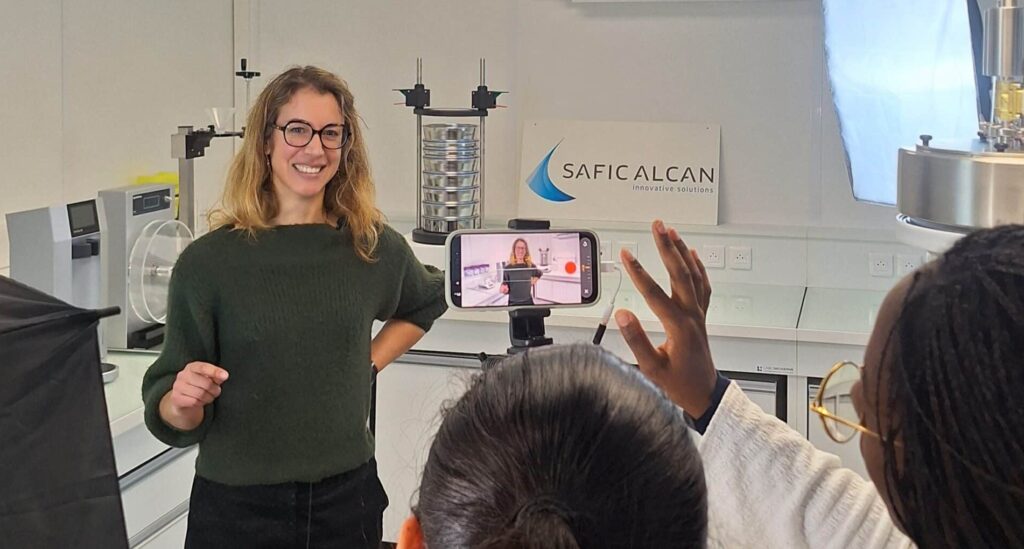
We organized an exclusive Q&A session with Maeva Croué — CSR Coordinator for Lactalis Ingredients Pharma — interviewed in collaboration with our distribution partner Safic-Alcan.

Meet the Expert: Maeva Croué
Maeva is the Product Manager at Lactalis Ingredients Pharma. With extensive expertise in pharmaceutical excipients and product development, she plays a key role in ensuring the quality, reliability, and innovation of Lactalis’ pharmaceutical lactose solutions.
This interview spotlight three major sustainability pillars for Lactalis Ingredients Pharma:
🌱 Our environmental and social commitments
♻️ The carbon footprint of pharmaceutical lactose
💧 Our responsible and optimized water‑management approach
Below you will find the the video of the interview and its transcript; focusing on our water footprint.
What are the main sources of water consumption in your processes?
Producing pharmaceutical‑grade lactose requires significant volumes of water. To give an order of magnitude, producing 10,000 tons of pharmaceutical lactose requires the equivalent of 20 Olympic swimming pools, which represents 5 to 7 liters of water per kilogram of product.
One of the most water‑intensive steps is lactose purification, which involves multiple washing stages to remove unwanted components such as residual proteins, minerals, and vitamins. Water is central to our ingredients production activities—not only because it is essential for our industrial processes (membrane filtration, concentration, diafiltration, cleaning), but also because it provides an opportunity for recovery and reuse.
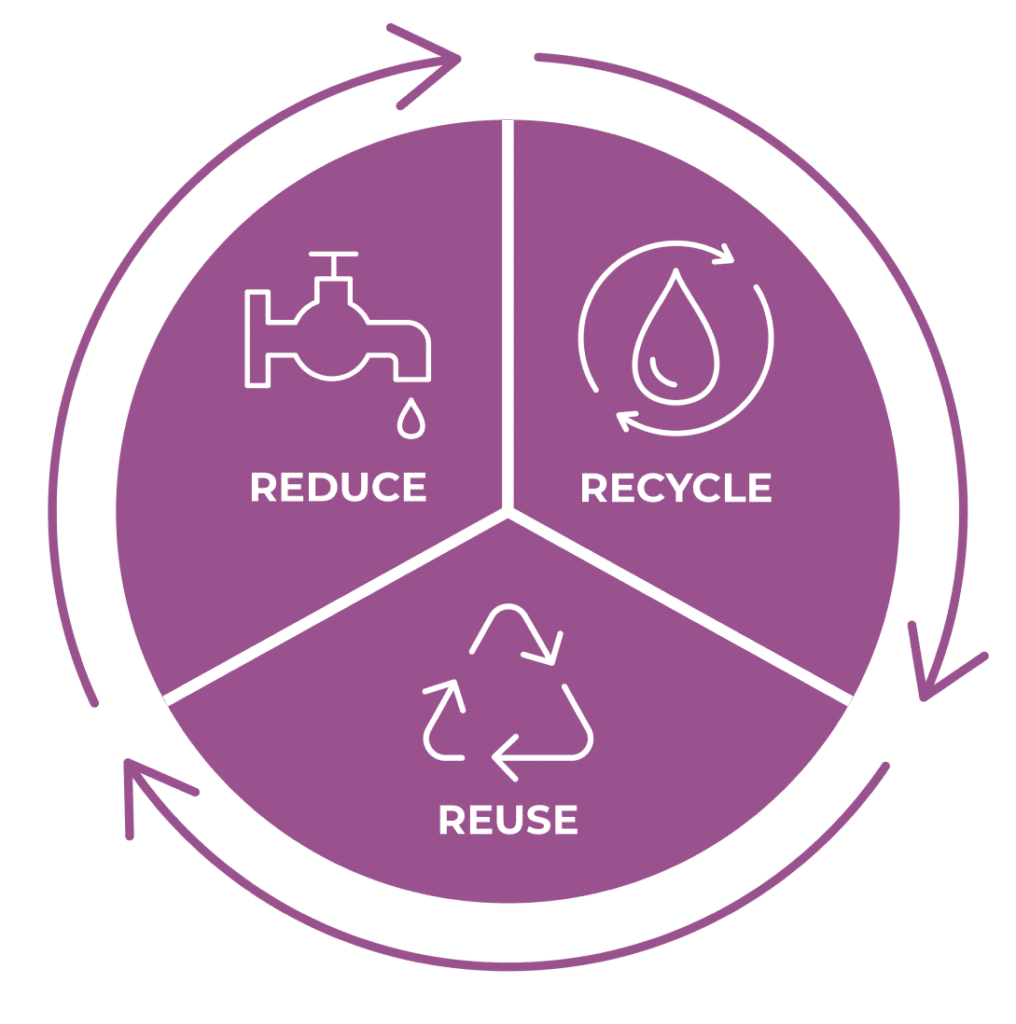
You have a structured approach built on three pillars to reduce your water footprint. How are these pillars—REDUCE, REUSE, and RECYCLE—applied in practice, and which industrial uses are already supplied by recovered water?
Our core business is transforming liquid milk into powder. This transformation requires removing nearly 90% of the water naturally contained in milk.
Our water‑reduction strategy is therefore structured around three pillars, all aimed at reducing the volume of water withdrawn from the environment:
1. REDUCE
Reducing our water needs through optimization of production and cleaning processes.
This decreases the amount of water extracted (from boreholes, municipal networks, etc.).
2. REUSE
Recovering water from our industrial processes—specifically the water extracted during evaporation and membrane concentration of dairy matter.
Recovered process water is then reused for:
- Boiler cooling
- Rinsing lactose crystals
- Membrane cleaning
3. RECYCLE
Recycling water after treatment in our wastewater treatment plants (WWTP).
This water is used, for example, to cool the Air Cooling Towers at our industrial sites.
What targets have you set to reduce your water footprint, and what concrete results have already been achieved at your Retiers site?
We monitor our water footprint through both quantitative and qualitative indicators, including:
- Water withdrawal per ton of product
- Volume of water discharged into the natural environment
- COD (Chemical Oxygen Demand) at WWTP outlet, which ensures that water released into the environment meets quality requirements
Our target is to reduce water withdrawals by 10% vs. 2019.
At the Retiers site, the progress made is significant:
- In 2025, the site reduced its water needs by 6% compared with 2022
- Water withdrawals (from boreholes and process water) were reduced by 37%, largely thanks to increased reuse of process water
These results are very encouraging and confirm the relevance of our approach to sustainable water management.
Maeva CROUE
CSR Coordinator for Lactalis Ingredients