Towards more sustainable Lactose: Strategy and Action Levers at the Retiers Site
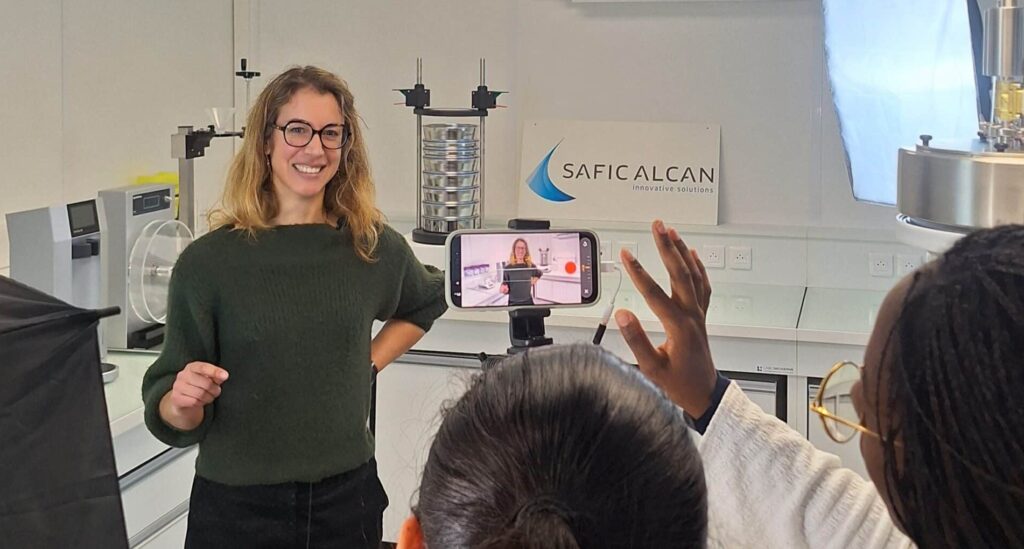
We organized an exclusive Q&A session with Maeva Croué — CSR Coordinator for Lactalis Ingredients Pharma — interviewed in collaboration with our distribution partner Safic-Alcan.

Meet the Expert: Maeva Croué
Maeva is the Product Manager at Lactalis Ingredients Pharma. With extensive expertise in pharmaceutical excipients and product development, she plays a key role in ensuring the quality, reliability, and innovation of Lactalis’ pharmaceutical lactose solutions.
This interview spotlight three major sustainability pillars for Lactalis Ingredients Pharma:
🌱 Our environmental and social commitments
♻️ The carbon footprint of pharmaceutical lactose
💧 Our responsible and optimized water‑management approach
Below you will find the the video of the interview and its transcript; focusing on our carbon footprint commitments.
How do you assess the carbon footprint of your pharmaceutical lactose, from the dairy upstream to the energy consumption at your Retiers site?
To evaluate and measure the carbon footprint of our activity, two key elements must be considered:
- The amount of milk required to produce lactose, while avoiding double counting. A share of the upstream milk is used for cheese production or other dairy proteins. We therefore refer to FPCM (Fat‑ and Protein‑Corrected Milk) equivalent, which accounts for these upstream allocation steps.
An emission factor is assigned to this milk. This factor varies from one country to another. In France, it is estimated at around 1 kg CO₂e per liter of milk. - The evaluation of our industrial impacts, and more specifically our energy consumption. Each type of energy consumption is linked to an energy source that emits more or less CO₂ (fossil fuels, green energy, etc.). These sources include gas, oil, coal, nuclear energy, or more renewable solutions such as solar, wind, or biomass.
The energy mix available depends on national policies and on industrial site infrastructures. Energy consumption is then converted into CO₂ equivalent per ton of ingredients produced at the site.
Based on these assessments, we estimate that pharmaceutical lactose produced in France has an emission factor of around 11 kg CO₂e per ton of product, with the dairy upstream accounting for more than 90% of total emissions.
This first overview provides a snapshot at a given point in time. To go further, we conduct a detailed analysis of each step of the process to identify potential optimizations, reduce energy consumption, and thereby lower CO₂ emissions.
Is there another method you use to assess the environmental footprint of your pharmaceutical lactose?
Another way to assess environmental impact is through Life Cycle Assessment (LCA). Beyond carbon, LCA considers 16 additional criteria (water use, biodiversity, soil pollution, etc.), providing a comprehensive view of the environmental footprint of lactose production across the entire value chain—from upstream (raw materials, transport) to downstream (use, recycling).
What concrete measures have you implemented to reduce the carbon footprint of lactose?
At the Retiers site, we are planning to produce steam using heat generated from the combustion of recovered solid compounds.
This project is expected to be operational in 2027 and would represent a significant reduction in our emissions.
Maeva CROUE
CSR Coordinator for Lactalis Ingredients Pharma